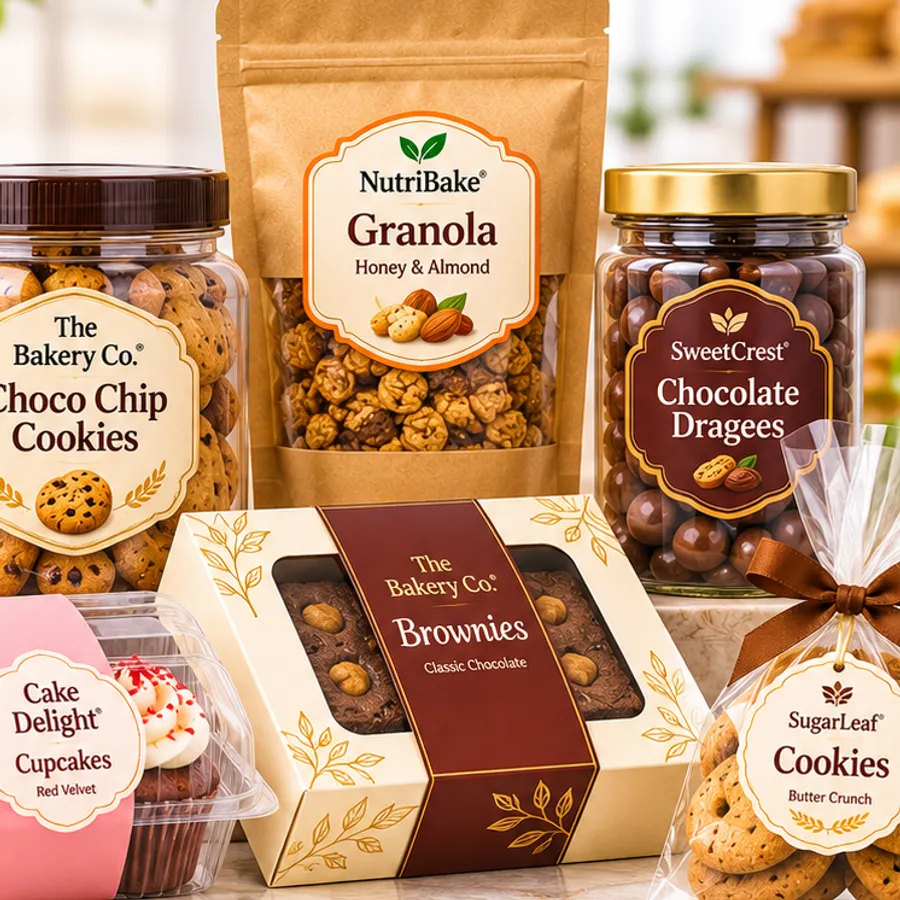
In short
Know where the label will live (it decides the material), measure the pack, decide how labels will be applied (by hand or by machine), order a quantity that brings the price per label down, check what the law asks you to print, and send print-ready artwork. Test one label on the real pack before a big run.
The ten things
The pack decides the material
Dry box or jar: paper works. Fridge, bathroom, oil or ice: waterproof film. Glass you want to show off: clear film.
In practice: Tell us what the product is and where it is stored, and we'll suggest the material.
Measure the real pack
Labels fit the straight part of a jar or bottle, not its full height. A tapered or curved shoulder needs a smaller label than you'd think.
In practice: Measure with a ruler and a paper strip, and test a paper cut-out.
Hand or machine?
If you stick labels by hand, sheets or loose pieces are easiest. A labelling machine needs rolls with the right core size and winding direction.
In practice: Check your machine's core size and which way the label must come off the roll.
Quantity changes the price per label
Set-up costs about the same for 50 labels as for 500, so the price per label falls as you order more.
In practice: Compare the price per label at two or three quantities before deciding.
Each design is its own set-up
Three flavours at 100 labels each cost more than one design at 300, because each one is checked and set up separately.
In practice: Where you can, share one base design and change only the variant name or colour.
Some text is required by law
Food, cosmetics and packaged goods each have information that must appear on the pack, such as net quantity, maker's details and dates.
In practice: Read the rules guide for your product before the design is finished, not after.
Artwork needs to be print-ready
A design made for Instagram is usually the wrong size and resolution for print.
In practice: Final size in mm, 2 to 3 mm bleed, 300 dpi images and a vector logo.
Screen colours are brighter than print
Screens make colour from light; print uses ink. Bright greens, oranges and blues usually come out calmer.
In practice: For an important brand colour, order a short run first and approve it on the real stock.
Finishes add a step, and impact
Matte or gloss lamination, spot UV, emboss and foil make a label feel premium. Each adds a step and some cost.
In practice: Use a finish where the shopper will notice it: the logo or the product name.
Order a few extra
Some labels get spoiled while applying them by hand, especially at first.
In practice: Order a few more than your pack count, and keep a small stock for reorders.
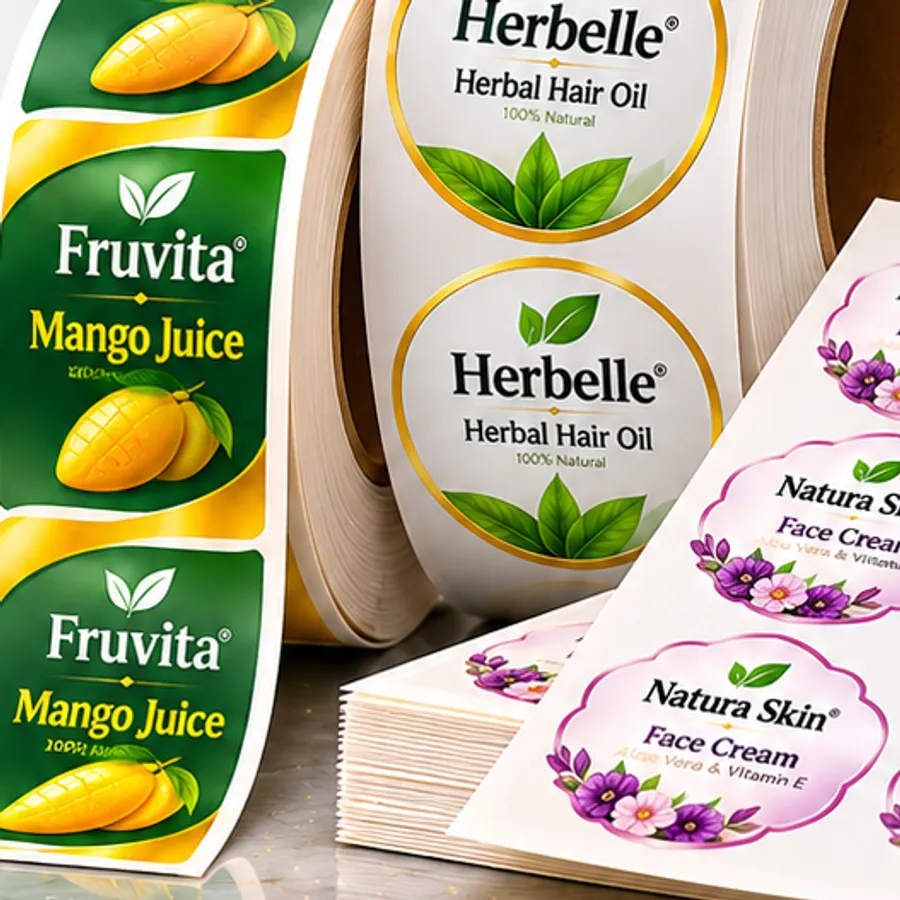
Rolls, sheets or loose pieces
| Format | Best for | Watch out for |
|---|---|---|
| Loose pieces | Small batches applied by hand | Slower to apply on long runs |
| Sheets | Hand application, home or desk use | Fewer labels per sheet on big sizes |
| Rolls | Labelling machines and long runs | Core size and winding direction must match the machine |
Your first order, step by step
- Pick the shape, size, material and quantity online, or ask for a quote for rolls and specialty labels
- Upload your artwork, or ask for design help
- We check the file and confirm the details with you before printing
- Labels are printed at our unit in Prayagraj and delivered across India
Tip: If you're unsure about a material or size, order the minimum online first and test it on your pack. It is the cheapest way to avoid a wrong big run.